BS EN 1063
Ballistic Glass
The standard
How the glass is tested
The European standard for ballistic glass is BS EN 1063. It rates glass based on its ability to stop different weapons and ammunition. The classification spans nine levels, from BR1 (lowest) to BR7 (highest), plus two specific levels for shotguns (SG1 and SG2).
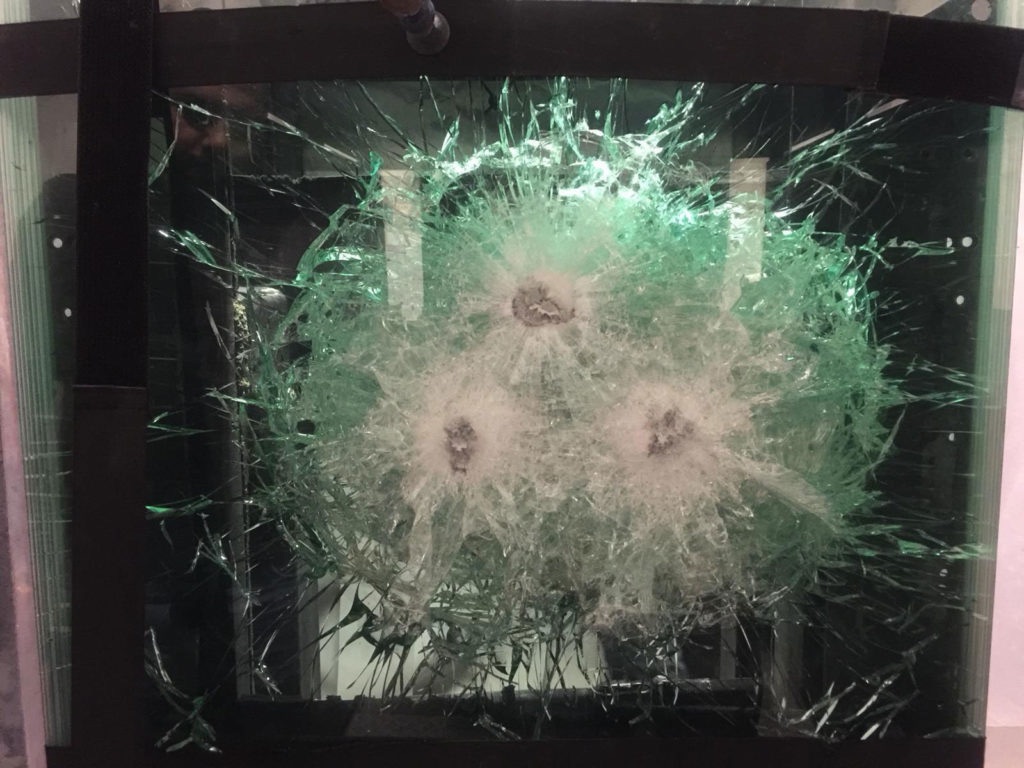
To pass the test, three controlled shots are fired into a 120 mm triangle pattern, and the bullet must not penetrate the glass safe side.
BR1 to BR7
Standard protection levels
- Level
- BR1 to BR7, from lowest to highest protection. BR2 to BR4 are tested against handgun rounds; BR5 to BR7 against rifle rounds.
- Weapon and round
- The type of weapon and the specific ammunition each level is tested against, as defined under BS EN 1063.
- Glass thickness
- The Jaden glass thickness (N/S) for that category, where listed in the product sheet. See the full table below.
-
BR1
Sporting rifle
.22 LR round
Sporting rifle
Resists a .22 LR sporting rifle round.Not listed -
BR2
Handgun
9mm Luger round
Handgun
Resists a 9mm Luger handgun round.Not listed -
BR3
Handgun
.357 Magnum round
Handgun
Resists a .357 Magnum handgun round.Not listed -
BR4
Handgun
.44 Magnum round
Handgun · 28mm glass
Resists a .44 Magnum handgun round.28mm N/S -
BR5
Assault rifle
5.56x45mm round
Assault rifle · 38mm glass
Resists a 5.56x45mm assault rifle round.38mm N/S -
BR6
Rifle
7.62x51mm round
Rifle · 43mm glass
Resists a 7.62x51mm rifle round.43mm N/S -
BR7
Rifle
7.62x51mm hard-core armour-piercing round
Rifle · 73mm glass
Resists a 7.62x51mm hard-core armour-piercing rifle round.73mm N/S -
SG1
SG2Shotgun
Two specific levels for shotguns
Shotgun
Not listed
Not sure which level you need? Tell us about the project and we will help you match the level to the requirement.
S vs NS
The spall categories
- S Spall Allowed
- The bullet is stopped, but flying glass fragments (splinters) penetrate the safe side.
- NS No Spall
- The bullet is stopped, and the safe side remains smooth with no dangerous glass splinters.
Applications
Where ballistic glass is used
The client documents do not list applications for ballistic glass. The uses, descriptions and images below are the designer's suggestions to show the layout, and await the client's confirmation and photographs.
-
Banks & cash handling photo (placeholder)
Banks & cash handling
Counter screens and teller positions where staff face the public.
-
Police & custody suites photo (placeholder)
Police & custody suites
Front desks, interview rooms and custody areas needing a rated barrier.
-
Embassies & government photo (placeholder)
Embassies & government
Entrances and reception glazing for buildings with an elevated threat level.
-
Gatehouses & guard posts photo (placeholder)
Gatehouses & guard posts
Glazed guard positions at site entrances and perimeter checkpoints.
-
Jewellers & high-value retail photo (placeholder)
Jewellers & high-value retail
Shopfronts and display cases that resist attack without hiding the goods.
-
Reception & interview screens photo (placeholder)
Reception & interview screens
Discreet protection for staff in public-facing offices and clinics.
-
Control rooms photo (placeholder)
Control rooms
Secure observation glazing for security, utilities and transport control rooms.
-
Fuel stations & kiosks photo (placeholder)
Fuel stations & kiosks
Night-pay windows and kiosks that stay open late with a single operator.
Construction
Glass construction
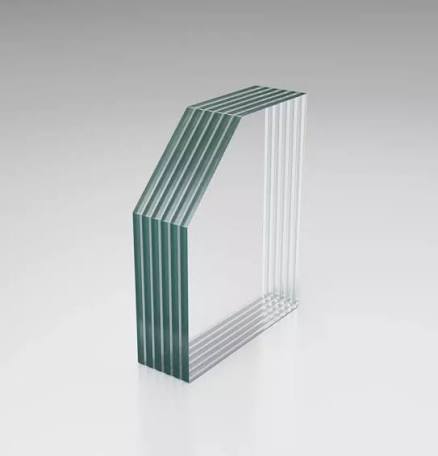
The glass is assembled using multi-layers of glass and polycarbonate, with PVB interlayers.
For NS glass a final thin layer is added to the safe side.
Glass thickness by category
| Category | Spall | Thickness |
|---|---|---|
| FB / BR4 | N/S | 28mm |
| FB / BR4+ | N/S | 32mm |
| FB / BR5 | N/S | 38mm |
| FB / BR6 | N/S | 43mm |
| FB / BR7 | N/S | 73mm |
Discuss ballistic protection for your project
Email info@jadenglass.com or call +44 (0)777 962 8185.